Explaining technical content clearly: 5 tips for corporate influencers
Technical topics are often complex. Communicating them doesn’t have to be. Corporate influencers show how to frame and tell specialist knowledge so that it stays precise and gives readers relevant orientation. Told well, it also sparks conversation. Five tips help: establish context, define one core message, follow a clear writing structure, split large topics and explain technical terms and figures.
PLC, OEE, MES, OPC UA. Lost you already? A technical post can be accurate and still miss its audience. This happens above all when it opens with product features, abbreviations, process details or technical metrics before it is clear why this information matters at all. To experts, the connections may be obvious. Everyone else is left with one question: what’s in it for me?
This is where corporate influencers take on an important role as translators: they put specialist knowledge into the context of their audience.
Corporate influencers as translators of specialist knowledge
Corporate influencers know more than the technical connections. They often also know the questions these raise in everyday work with projects and customers or across the industry. This closeness to practice is their strength. They can explain where a topic actually becomes relevant and which challenges come with it. They also know what matters in the solution.
A clear post sets one focus, for example a specific problem or a change in day-to-day work. An insight from practice works just as well. Technical expertise provides the foundation. Your own perspective frames the topic so that readers can understand and discuss it.
This way, the corporate influencer avoids sounding like an advertising channel or a technical data sheet. Five tips help them give their audience reliable orientation in a complex technical field.
1. Establish context: how technical content becomes relevant
The first rule when you translate technical content into language your audience understands: establish context. Even a precisely described fact needs a connection your readers can follow. There are different angles you can take:
- What problem lies behind a technical development?
- Why is the topic relevant right now?
- What changes as a result in day-to-day work or for customers and the industry?
- What follows from it?
Important: you don’t have to work through these questions in every post. A LinkedIn post gains clarity when it pursues exactly one central message. Trying to answer several questions and thoughts at once blurs that message.
Making content understandable still means keeping the specialist substance and the decisive details. Technical expertise remains the basis of credibility. The angle shifts, though: alongside the question of how a solution works, its meaning for the audience moves to the front.
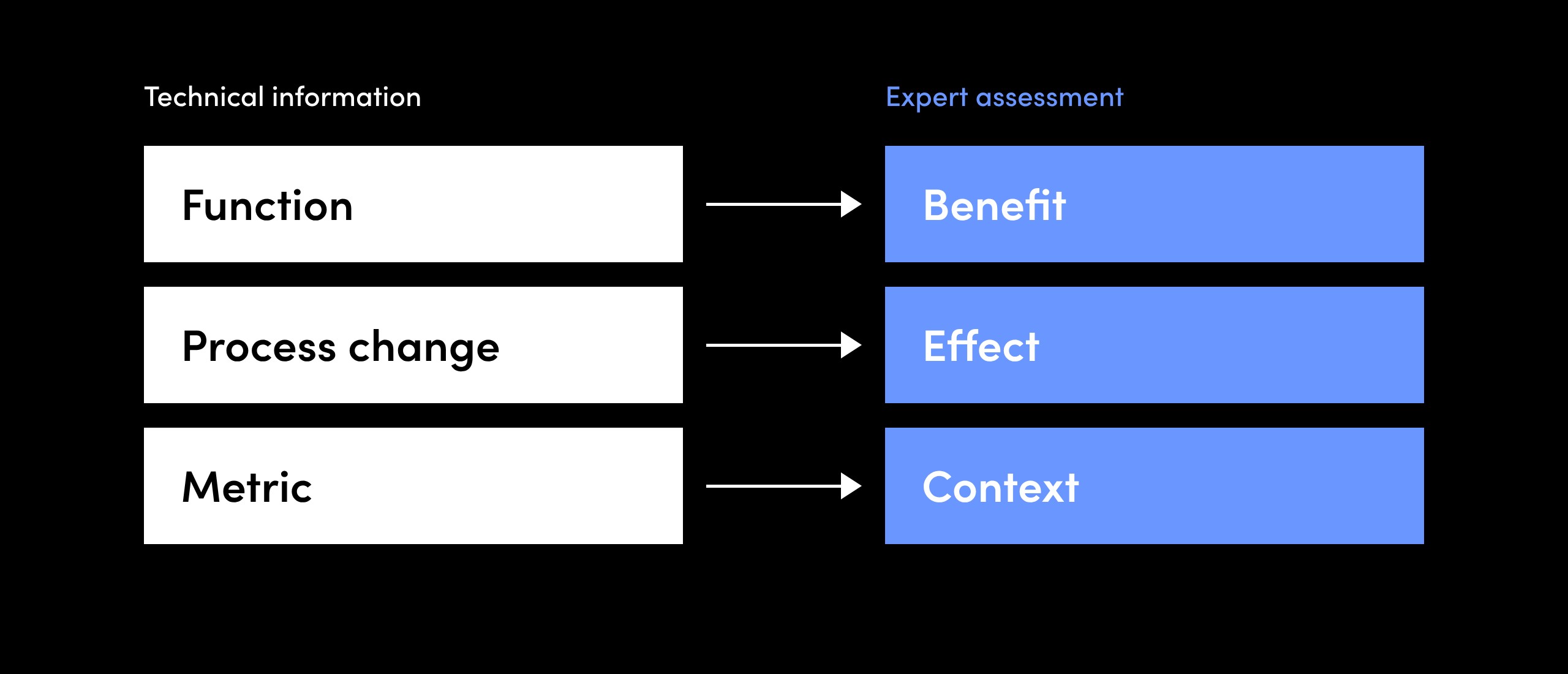
This turns a piece of technical information into an expert assessment. Functions are linked to their benefit, and process changes become tangible through their effects. Metrics are explained in the right context.
2. From technical topic to core message
Before you write a technical LinkedIn post, a short editorial step pays off: narrow down the topic. You should be clear about who the post is for and what this audience should take away from it. On this basis, you can pick the relevant technical details and leave out everything that does not support the core message.
A simple rule of thumb shows whether the focus is sharp enough. Can you state the core message in one sentence? If not, the topic may still be too broad. A guiding question can sharpen the focus further, for example on a concrete problem or a practical effect. An insight from a project can also serve as the anchor. Here too, not every aspect has to fit into the post. A clear focus usually has more impact than an attempt to cover a topic completely.
Your own expert perspective matters just as much. Which observation or experience lies behind the message? Your view can stay measured, as long as it makes clear how you arrived at your assessment. This gives the post a solid framework.
3. The writing structure for technical LinkedIn posts
A clear storyline helps you get technical content to the point. A framework of hook, context, example, own perspective and close works well for this.
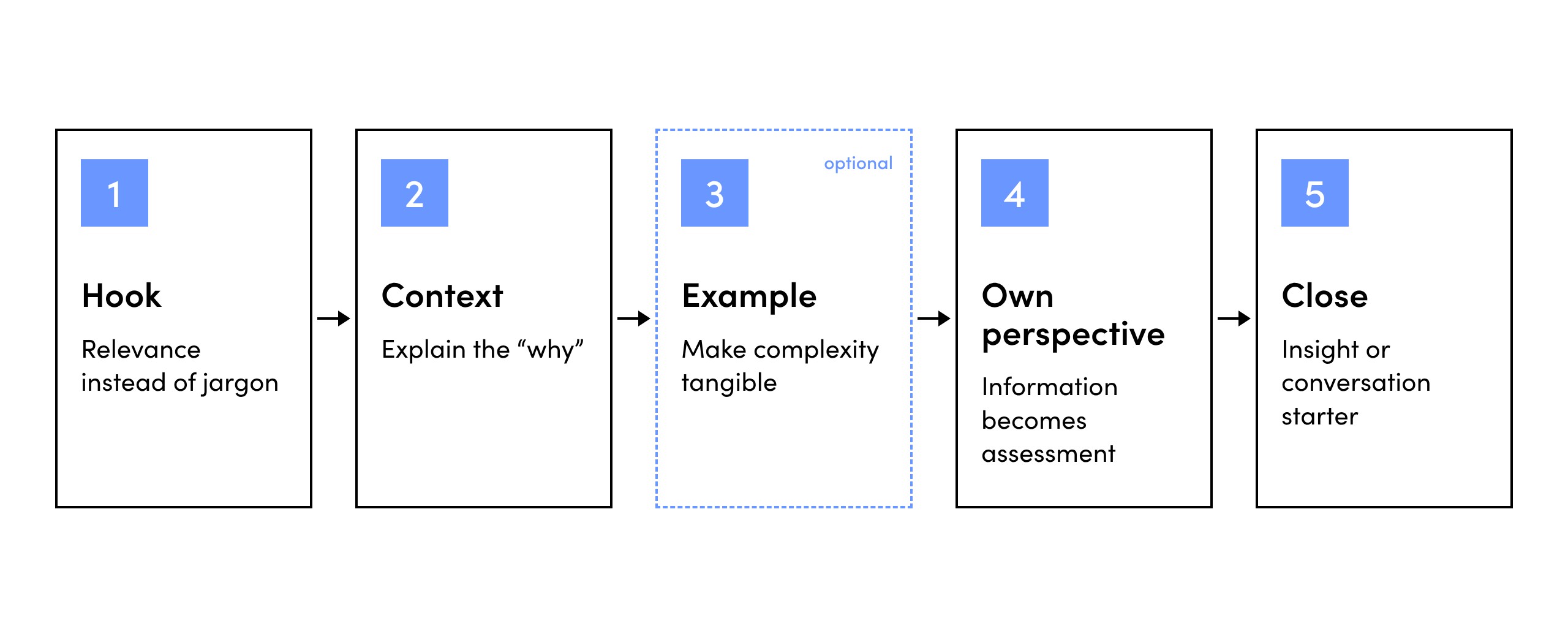
Hook: relevance instead of jargon
An opening built on an observation or a question usually sparks more interest than a technical definition. A concrete challenge works well too. The hook should make readers curious and match the content. A sharp statement only convinces if the post then delivers on it.
Context: explain the “why”
Sketch the starting point briefly: why is the topic relevant now? This gives readers enough orientation without the post drifting into technical detail.
Example: make complexity tangible
A case from day-to-day work or a typical question from practice can make abstract connections easier to grasp. An observation from a project does the same. The example should illustrate the central message and keep to a single story. If there is no suitable example, you can skip this step.
Own perspective: information becomes assessment
Your own assessment follows from the context or the example: what does the case show? What do you find remarkable about it? A concrete observation or a reasoned evaluation gives the post a profile. It also shows the value the post adds beyond pure information.
Close: insight or conversation starter
The close can sum up the thought concisely or name the consequence. If the post is meant to spark discussion, ask a concrete question that ties in with readers’ own experience.
4. When a topic is too big: split it up instead of overloading
Some technical topics contain several insights or challenges, often with lessons learned on top. Packed into one LinkedIn post, they compete for attention. The central message easily gets lost. In that case, it makes more sense to split the material.
A series of posts could, for example, start with the initial problem and then explain the solution or approach. A final post puts the experience gained into perspective. Each post needs its own single focus and has to make sense on its own. In other words, every post must be able to stand alone.
5. Explain technical terms and figures clearly
A technical term that belongs to a topic does not automatically add value for readers. If they need it to follow the post, introduce it at the point where it comes up and explain it briefly. Spell out abbreviations on first mention unless they are widely known.
Figures need context too. A measured value or a percentage says little on its own. Readers need the comparison behind it and the change it shows. And what does it mean in practice? A short explanation makes the value understandable without overloading the post with additional detail.
Conclusion: specialist knowledge that reaches its audience
Telling technical content clearly as a corporate influencer comes down to the essentials: the right context and a clear message. Both need an assessment readers can follow. This turns specialist knowledge into a post that does more than inform: it gains meaning for its audience.
The Corporate Influencer Playbook by additiv (available in German) shows how corporate influencers build their own expert voice step by step. For programmes with several experts in your company, additiv works with you as a social media agency for industrial B2B companies.
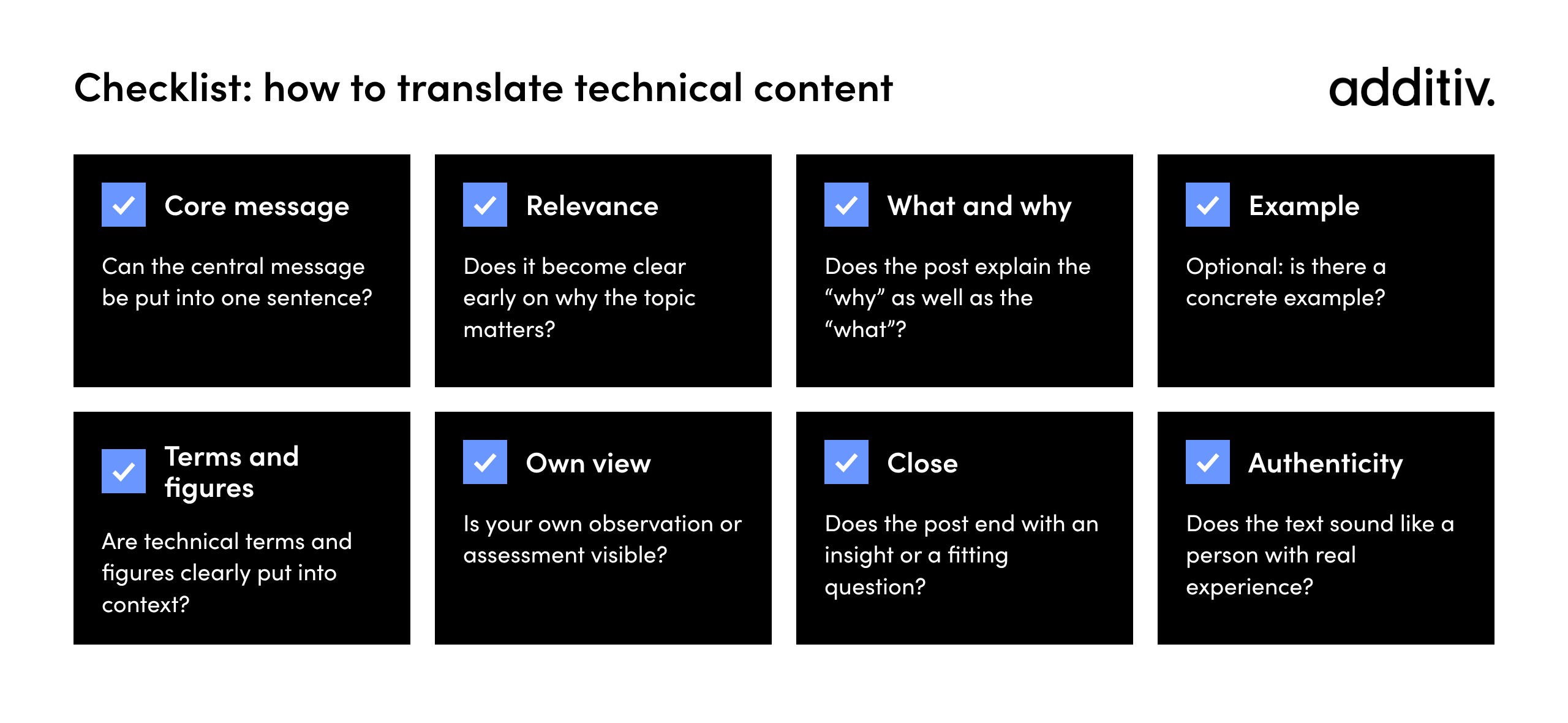
Checklist: how to translate technical content for your audience
Frequently asked questions about technical content for corporate influencers
What does it mean to translate technical content for LinkedIn?
It means keeping the specialist knowledge correct while telling it from the reader’s benefit. The post opens with the question your readers are asking themselves. Abbreviations and data sheet values come later, and only where they support the message.
Why are corporate influencers particularly suited to technical topics?
They work close to machines and customer conversations, so they know which questions really come up in practice. That makes their assessment credible. Qlar, a specialist in weighing and dosing technology, relies on its sales experts for this. They share personal insights on LinkedIn. In meetings and at trade fairs, people approach them about their posts.
Do technical terms have to be avoided in LinkedIn posts altogether?
No. A technical term can stay if the message cannot do without it. The audience decides: among automation specialists, OPC UA needs no explanation. If purchasing or management also read along, a short clause on its meaning helps.
How do I find a good topic for a technical post?
Start with the questions people ask again and again in daily work. What did customers want to know recently? Where do projects regularly get stuck? Observations like these lead to topics where your own experience adds something.
Should management and engineering also act as corporate influencers?
Yes, as long as they have something to put into perspective. Management can explain market developments and strategic decisions. Engineering teams show how a solution came about. A coordinated division of roles makes sure the topics of several voices complement each other.
How can I tell whether my technical post is easy to understand?
Eight questions help before you publish. Does the core message fit into one sentence? Does the opening show the relevance? Does the text explain the why as well as the what? Is there an example, where it fits? Are technical terms and figures explained? Is your own assessment visible? Does the text end with an insight or a question? Does it sound like real experience? A simple test: ask a colleague from another field to sum up the draft in one sentence.
Can AI help translate technical content?
Yes, with the wording. AI assistants such as ChatGPT or Claude simplify drafts and spell out abbreviations. They can also suggest alternative openings. The assessment from your own project experience and the technical review stay with the person who publishes the post.
How does additiv support corporate influencers in technical companies?
additiv helps industrial companies build corporate influencer programmes. At Qlar, workshops produced pragmatic guidelines with dos and don’ts that the experts use to create their own content. Our post on the LinkedIn profile for corporate influencers shows what the matching profile looks like.
